Focus On:
4 min read
Tune-In Tuesday – #5 Focus On: Why most event tech feels disconnected
Why most event tech feels disconnected
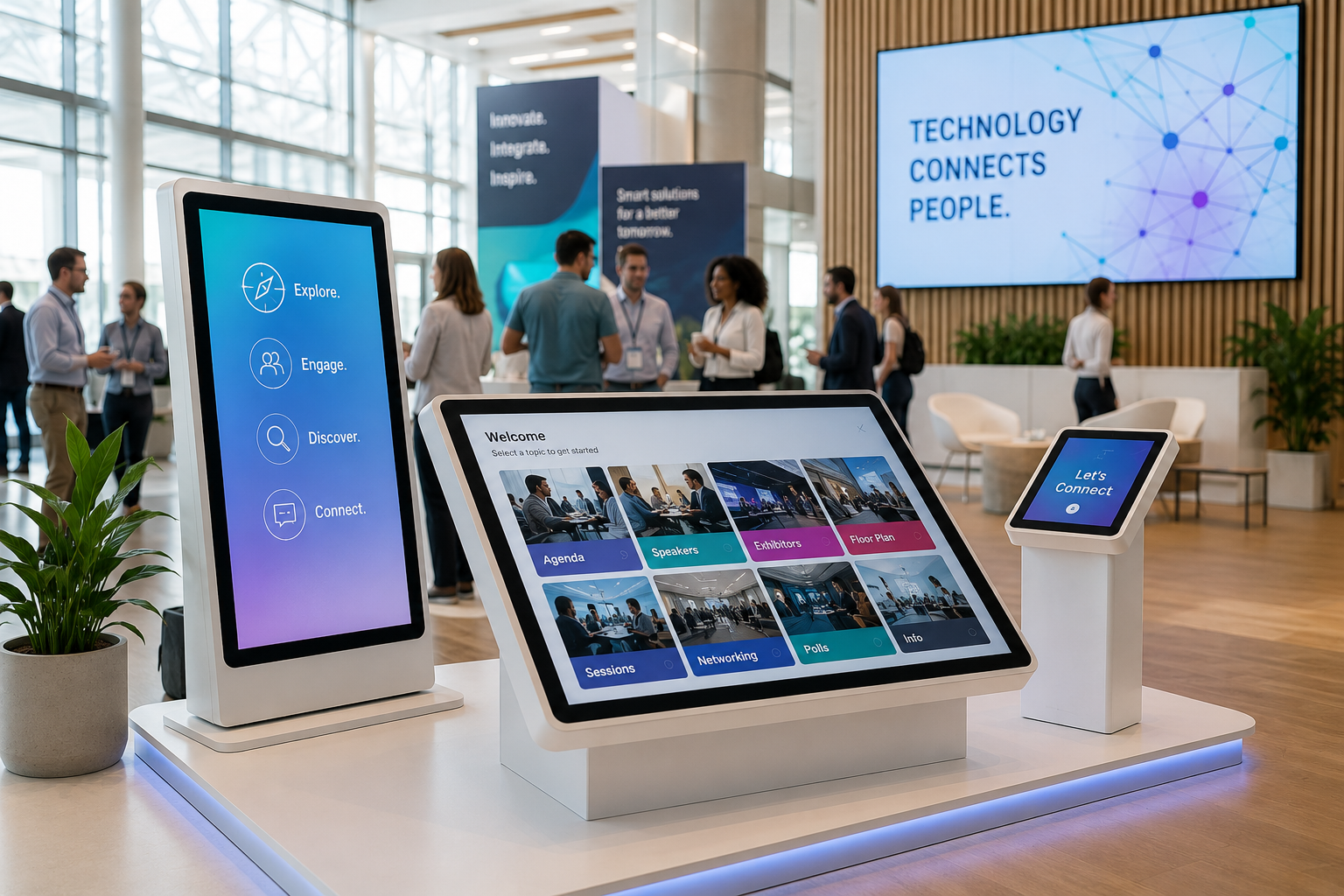
Modern events now rely on more technology than ever before. Registration systems, event apps, lead capture, touchscreens, analytics dashboards, content platforms and CRM integrations have all become standard parts of the event ecosystem. Individually, most of these systems work perfectly well.
The problem is that they often don’t work together.
That’s something we’re seeing more and more across exhibitions, conferences and brand activations. On the surface, the experience can look highly digital and connected, but underneath, many event ecosystems are actually fragmented. Different suppliers, different platforms and disconnected user journeys often create friction that attendees notice almost immediately.
The audience notices fragmentation quickly
Attendees don’t think in terms of systems or suppliers. They simply expect the experience to feel seamless.
You see the disconnect when:
- Registration Has To Be Repeated Multiple Times
- QR Codes Don’t Connect Across Touchpoints
- Lead Capture Data Doesn’t Flow Properly
- Interactive Experiences Feel Isolated
- Teams Manually Move Data Between Platforms
The issue usually isn’t that the technology itself is bad. It’s that nobody designed the experience as one connected ecosystem.
A lot of event technology still gets planned in silos. Registration might sit with one supplier, interactive experiences with another and analytics somewhere else entirely. Each individual platform gets optimised independently, but very little attention is given to how everything works together as a complete audience journey.
Connected experiences create stronger engagement
Interestingly, attendee expectations are becoming much higher. People now expect event experiences to behave more like connected digital platforms rather than collections of separate activations.
The strongest event ecosystems tend to work more holistically:
- Registration Flows Into Engagement
- Engagement Connects Into Content
- Content Feeds Into Analytics
- Analytics Supports Follow-Up And ROI Measurement
Everything supports everything else.
That’s where event technology starts becoming significantly more valuable because the interaction, personalisation and data become connected rather than isolated moments spread across different systems.
Simpler systems often work better
One of the more interesting shifts happening now is that brands are becoming far more commercially focused around this problem. The conversation is moving away from simply adding more technology and towards building smarter, more connected event ecosystems that are easier to manage long term.
In many cases, the answer isn’t adding more platforms.
It’s reducing complexity.
We regularly see situations where fewer, better-connected tools outperform large stacks of disconnected systems. Simpler user journeys often create stronger engagement than heavily layered experiences, and when systems communicate properly, operational overhead reduces significantly for both organisers and attendees.
At Lucden, a lot of our early-stage event conversations now involve mapping the audience journey before recommending technology. Not just asking:
“What do we want to build?”
But more importantly:
“How should this entire experience connect together?”
Because ultimately, the best event technology doesn’t feel like separate systems at all.
It feels effortless.