Focus On:
4 min read
Tune-In Tuesday – #20 Focus On: The future of eDetail aids isn’t more interactivity — it’s smarter conversations
The future of eDetail aids isn’t more interactivity — it’s smarter conversations
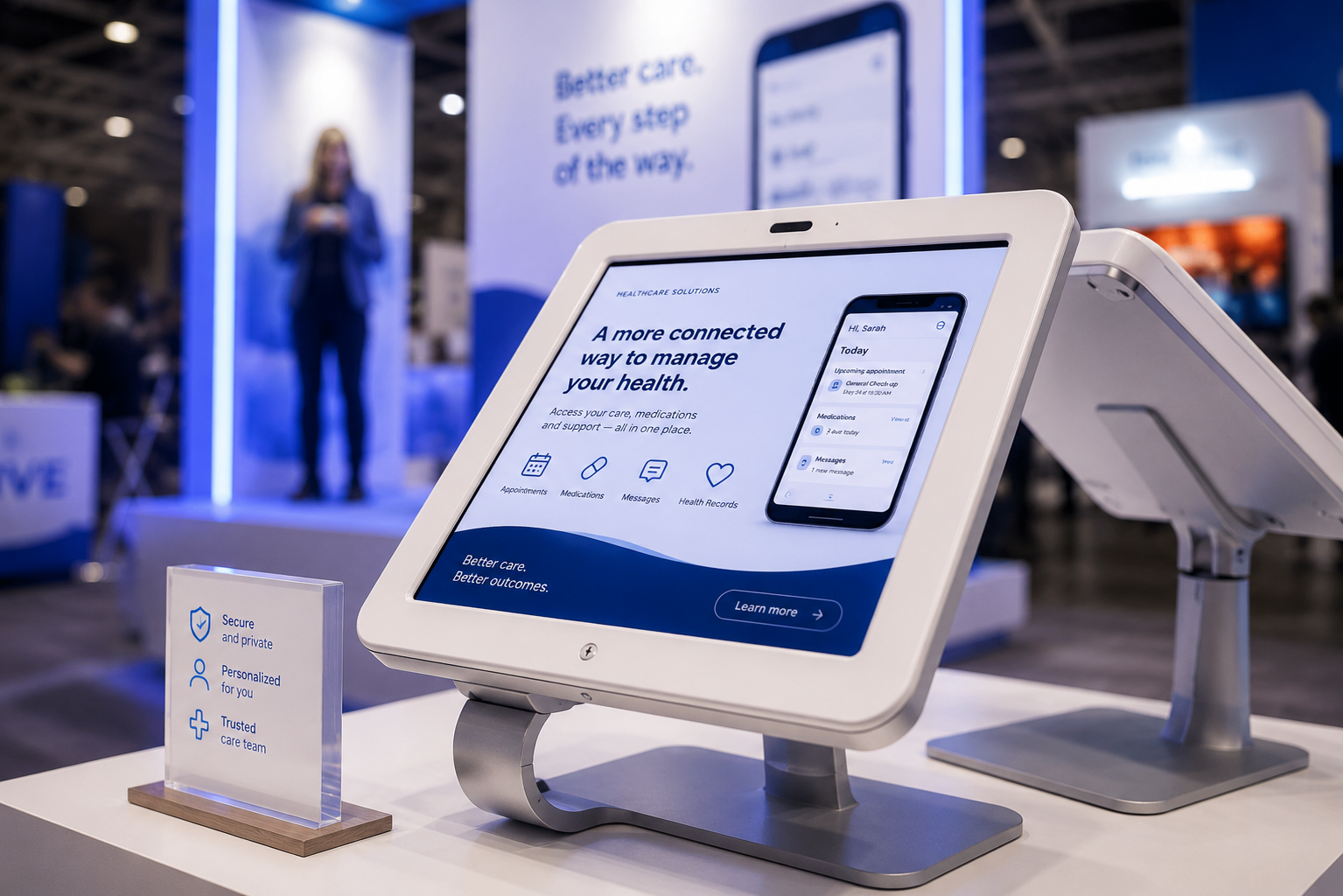
For years, pharma eDetail aids have largely focused on making presentations more interactive. Animations, tappable hotspots, interactive PDFs, slide transitions and embedded media have all helped modernise engagement compared to traditional static materials.
But despite the technology evolving, many eDetail experiences still fundamentally behave like digital brochures.
They’re often linear, fixed and heavily slide-led.
The challenge is that real healthcare conversations rarely work that way.
Healthcare professionals don’t all have the same amount of time, the same clinical priorities or the same level of familiarity with a product. Some discussions last two minutes. Others become highly detailed scientific conversations. Some HCPs focus heavily on efficacy data while others care more about tolerability, adherence or patient outcomes.
Yet many eDetail aids still assume every interaction should follow the same predefined pathway.
That’s where things start feeling restrictive.
The shift towards conversation-led engagement
One of the biggest opportunities now is moving away from “guided presentations” and towards more adaptive conversation tools that support how discussions actually happen in real life.
One of the simplest but most effective concepts we’re seeing is short-flow versus long-flow engagement. Instead of forcing every conversation through the same lengthy experience, reps can instantly adapt the depth of interaction depending on the situation.
For example:
- 2-minute overview
- 5-minute evidence summary
- Full clinical deep dive
That flexibility immediately makes conversations feel more relevant and responsive.
But the interesting part is that this idea can evolve much further. Rather than forcing linear navigation, future eDetail aids could dynamically adapt around the HCP’s interests during the interaction itself.
For example:
- “What about side effects?” → Open tolerability data
- “How does it compare against current treatment?” → Surface comparative evidence
- “What does the adherence data show?” → Launch patient outcomes pathway
At that point, the experience stops behaving like a slide deck and starts functioning more like an intelligent discussion platform.
Simplifying complexity creates better engagement
Another major opportunity is progressive reveal rather than information overload. Healthcare content is naturally complex and often contains large amounts of clinical data, subgroup analysis, graphs and statistical interpretation.
Too often, all of that information appears simultaneously.
The result is cognitive overload very quickly.
We’re increasingly seeing value in layered storytelling approaches where information appears progressively depending on the direction of the conversation.
For example:
- Core outcome first
- Supporting evidence second
- Subgroup analysis third
- Detailed scientific data only when needed
This creates a much more natural flow while allowing conversations to remain focused and adaptable rather than overwhelming.
We’re also seeing growing potential around adaptive patient scenarios where experiences dynamically adjust based on different patient types, treatment challenges or clinical considerations.
That makes engagement feel significantly more practical and clinically relevant rather than purely presentation-driven.
AI-assisted eDetailing is becoming more realistic
Perhaps the most significant evolution will come from AI-assisted interaction. Instead of manually navigating large slide libraries, reps may increasingly interact with platforms conversationally.
For example:
- “Show the adherence data”
- “Summarise this study”
- “Open the short version”
- “Compare against standard care”
- “Show subgroup outcomes”
The system then surfaces the most relevant content instantly.
That becomes especially valuable when dealing with:
- Large evidence libraries
- Multiple studies
- Global content variations
- MSL engagement
- Scientific deep dives
At that point, the eDetail aid stops functioning as a presentation tool and starts becoming an intelligent engagement platform.
Interestingly, the future of eDetailing may not require more animations, more transitions or more layers of “digital” for the sake of it.
What’s becoming more valuable is:
- Smarter conversation design
- Adaptive engagement
- Reduced friction
- Faster access to relevant information
- More natural interaction pathways
Because ultimately, the next evolution of eDetailing may not be about making presentations more interactive.
It may be about making healthcare conversations significantly more intelligent.