Focus On:
4 min read
Tune-In Tuesday – #17 Focus On: Event engagement — what actually works now
Event engagement — what actually works now
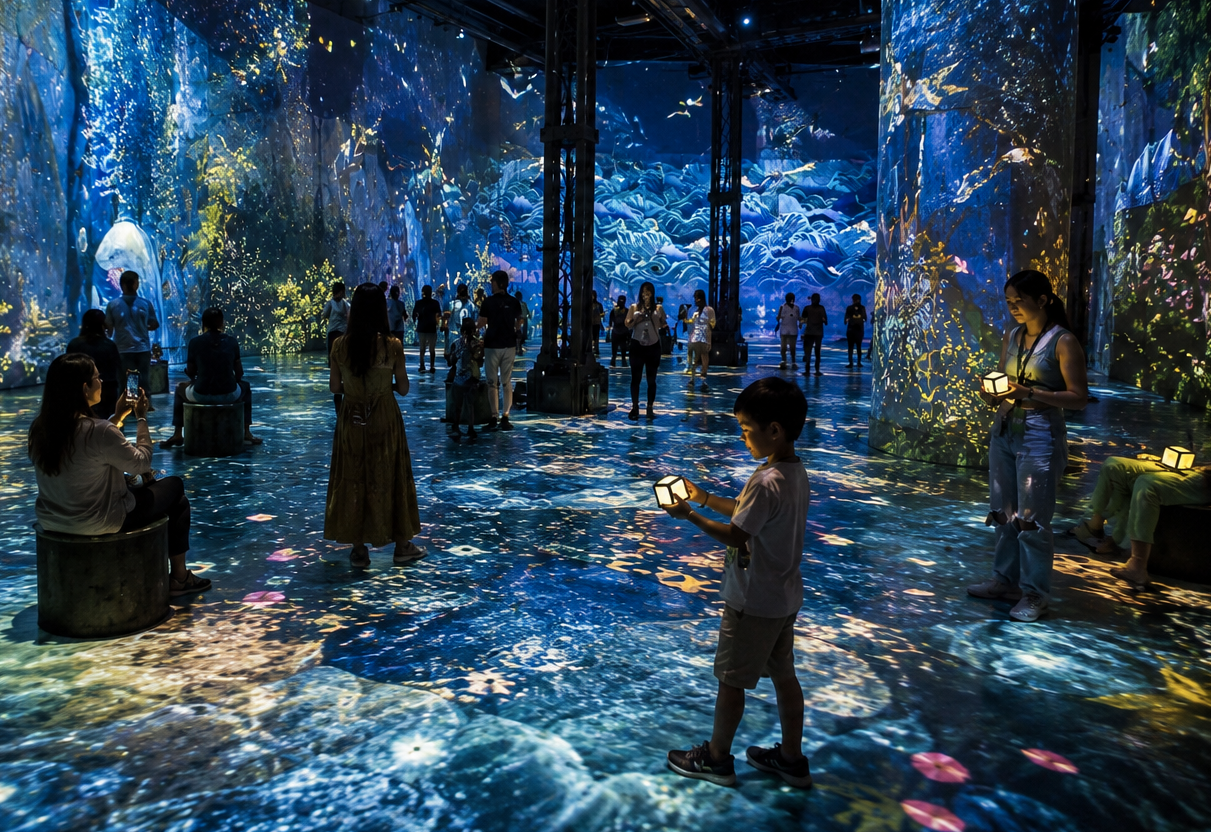
Event engagement has changed significantly over the last few years. Not long ago, simply adding a touchscreen, VR headset or interactive installation was often enough to attract attention because the technology itself still felt new.
That’s no longer really the case.
Audiences are now far more familiar with digital experiences in everyday life. People arrive at events having already interacted with polished apps, immersive content, interactive environments and highly personalised digital platforms. Expectations have increased dramatically.
That means engagement today depends far less on novelty and far more on relevance, usability and participation.
Simplicity often outperforms complexity
Interestingly, some of the busiest and most effective experiences at events today aren’t necessarily the most technologically advanced.
They’re often just the clearest.
The strongest event engagement usually happens when attendees instantly understand:
- What the experience is
- Why they should interact
- What value they’ll get from it
- How long it will take
- What happens next
If any of those things feel unclear, engagement drops very quickly.
Events have become highly competitive attention environments. At large exhibitions especially, every stand, screen and activation is competing simultaneously for limited audience attention. People don’t want to work hard to engage with an experience.
They want interactions that feel intuitive, lightweight and rewarding.
That’s why friction has become one of the biggest engagement killers.
Friction destroys engagement quickly
We still regularly see event experiences struggle because:
- Interactions are too complicated
- Onboarding takes too long
- Instructions are unclear
- Queues build up
- Technology feels intimidating
- The value exchange isn’t obvious
- Experiences demand too much time
Even visually impressive activations can underperform if the audience journey itself feels difficult.
Interestingly, shorter and more focused interactions often outperform larger, heavily layered experiences because they align much more naturally with how people actually behave at events.
That’s where one of the biggest shifts is happening.
The conversation is moving away from:
“How much technology can we add?”
towards:
“How naturally can people participate?”
Flexible experiences create stronger engagement
We’re also seeing a growing emphasis on adaptive engagement pathways. Not every attendee arrives with the same level of time, energy or interest. Some people want quick interaction. Others want deeper exploration.
The strongest experiences increasingly support both.
For example:
- Short-flow vs long-flow journeys
- Layered content structures
- Personalised pathways
- Optional deeper dives
- Guided interaction
- Mobile-connected experiences
These approaches tend to create stronger accessibility because audiences can engage at the level that feels natural for them without feeling overwhelmed.
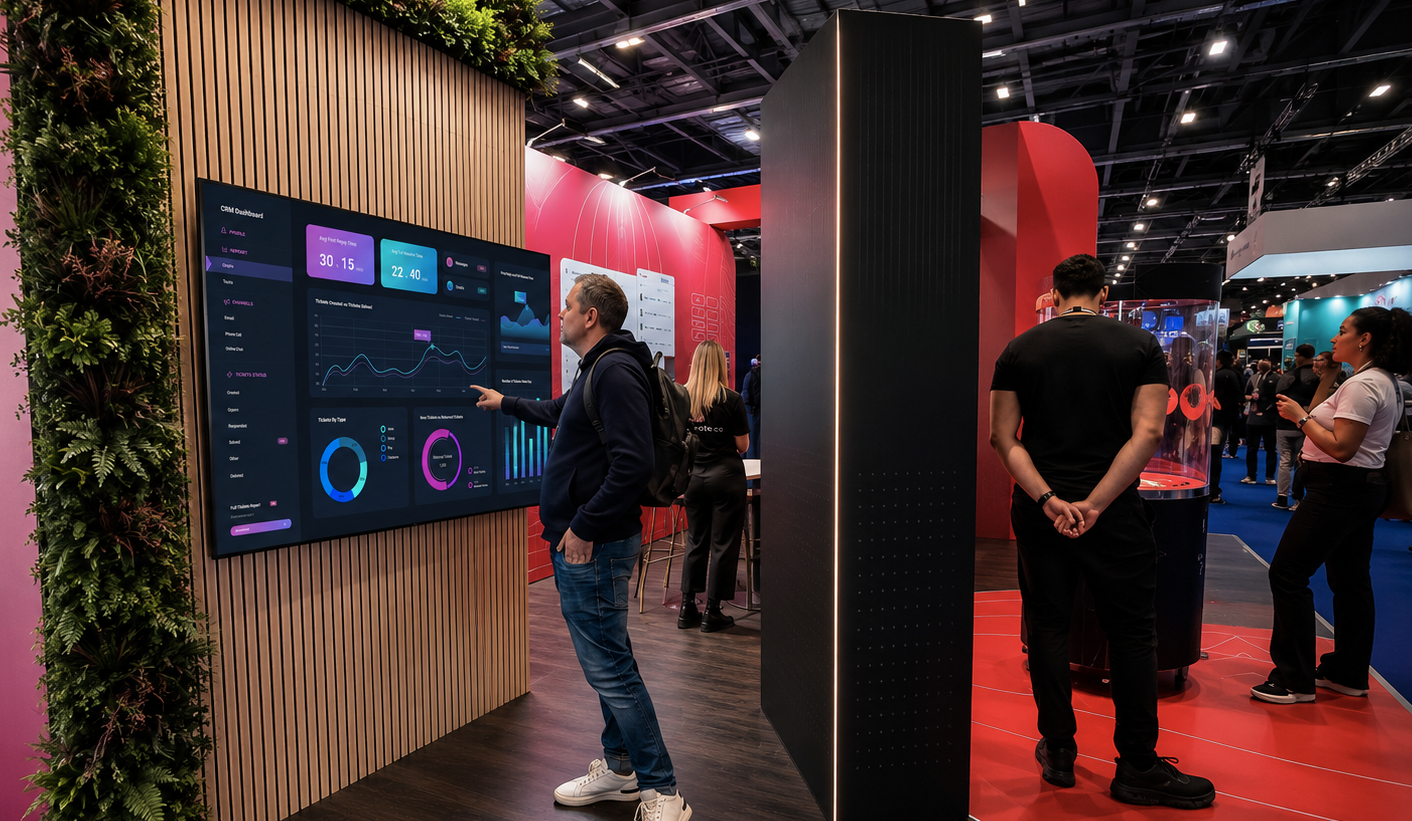
Another important shift is that audiences increasingly expect experiences to feel connected rather than isolated. Standalone activations with no wider purpose often struggle to create lasting value beyond the event itself.
The strongest event engagement now usually connects into a broader ecosystem:
- Lead capture
- Personalised follow-up
- CRM integration
- Content continuation
- Ongoing learning
- Behavioural insight
- Post-event interaction
That’s where engagement starts becoming commercially valuable rather than simply entertaining in the moment.
Technology alone is no longer enough
Importantly, none of this means immersive or large-scale event technology no longer works. It absolutely can. But the technology itself is rarely enough anymore.
The strongest event experiences succeed because they:
- Reduce friction
- Guide people clearly
- Encourage participation naturally
- Deliver value quickly
- Make audiences feel involved
At Lucden, many of our event conversations now begin with audience behaviour before discussing technology. The goal isn’t simply to create interaction.
It’s to create engagement that people genuinely want to participate in.
Because ultimately, event engagement only works when audiences feel the experience was designed for them — not just displayed at them.