
Behind the build
4 min read
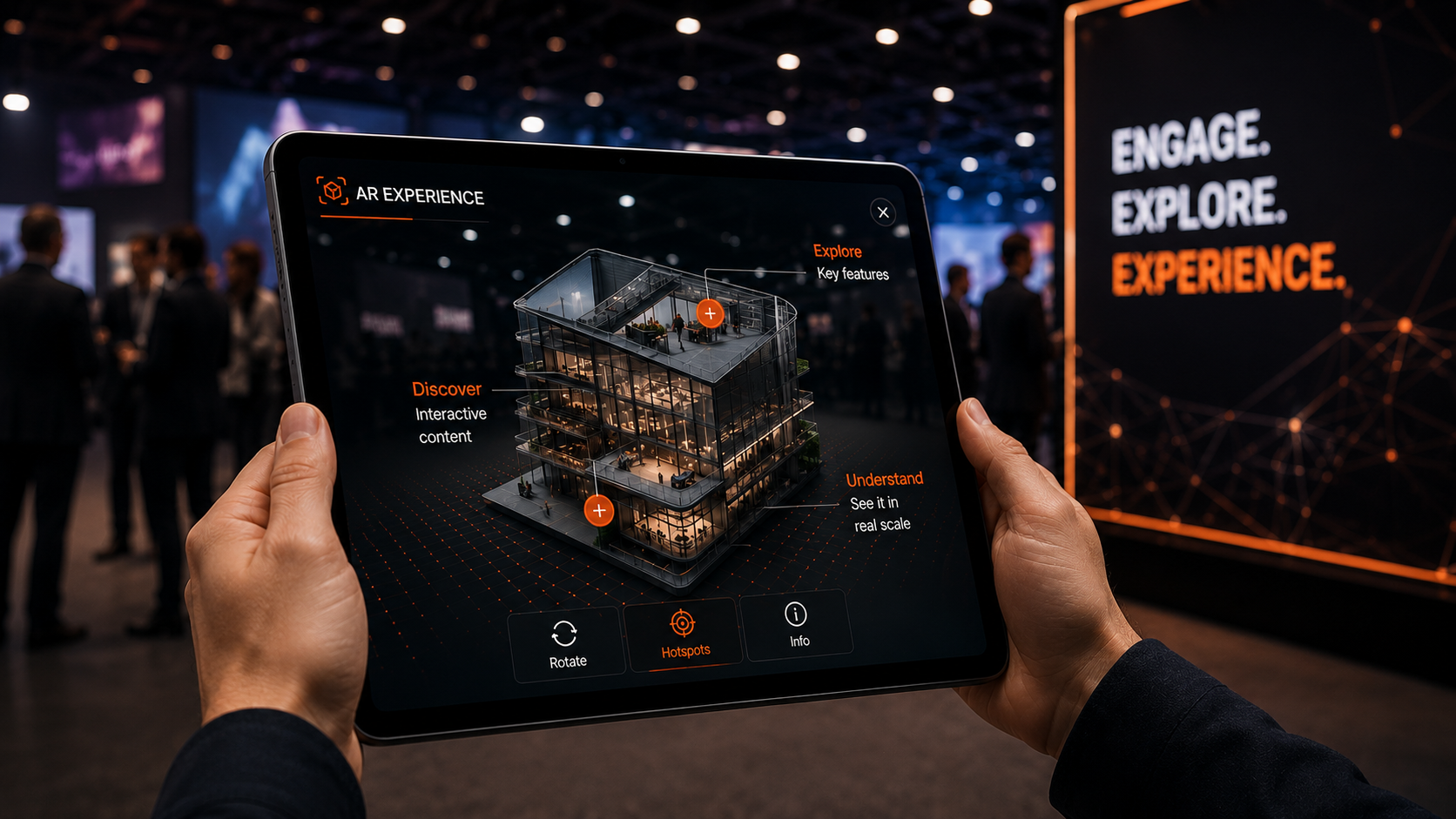
Behind the build: Evaluating augmented reality in digital projects
Why augmented reality isn’t always the right answer
Augmented reality continues to generate huge interest across digital experiences, events, training and product engagement.
And for good reason.
When used well, AR can create highly immersive experiences that help people visualise products, interact with information differently and engage with digital content in far more physical ways.
But one of the biggest misconceptions around AR projects is the idea that adding augmented reality automatically improves the experience.
In reality, the value of AR depends entirely on context, usability and whether it genuinely improves the user journey.
The process behind evaluating AR properly
We recently worked through a project where augmented reality was initially positioned as a key part of the experience.
Technically, it was absolutely possible.
But rather than immediately building around the technology itself, the process focused on evaluating whether AR genuinely improved the interaction or whether it was introducing unnecessary complexity into the journey.
That evaluation stage is incredibly important.
Because while AR can create standout moments, it can also introduce additional friction if the experience relies too heavily on setup, device permissions, environmental conditions or longer interaction times.
In some environments, that trade-off works perfectly.
In others, it can reduce engagement rather than improve it.
Understanding how users will actually behave
A large part of the process focused on understanding real-world user behaviour.
We looked closely at:
- How long users were realistically likely to engage
- Whether the environment supported AR comfortably
- What devices users would be using
- How quickly people could access the experience
- Whether AR improved understanding or simply added novelty
That distinction matters more than people often realise.
Some of the strongest immersive experiences use AR very selectively — enhancing a specific moment within the journey rather than building the entire experience around the technology itself.
The goal is rarely to use more technology.
The goal is to create a better interaction.
Why simplicity still matters in immersive experiences
One of the biggest challenges with emerging technologies is that they can sometimes become the focus instead of supporting the experience naturally.
Users don’t engage with digital experiences because the technology is impressive on its own. They engage because the interaction feels intuitive, useful or memorable.
That’s why simplification still plays such a major role, even within immersive projects.
Sometimes AR becomes the perfect solution. Other times, a simpler interaction creates a faster, clearer and more accessible experience overall.
The strongest projects usually evaluate both outcomes honestly rather than forcing technology into the journey unnecessarily.
Designing around value rather than novelty
Following the evaluation process, the final experience became significantly more focused around usability, clarity and engagement rather than simply maximising technical complexity.
It reinforced something we see repeatedly across immersive digital projects:
Good AR experiences are rarely defined by the technology alone.
They’re defined by whether the technology genuinely improves the user experience.
That’s usually where the most valuable immersive work begins.
Summary
Augmented reality can create incredibly engaging digital experiences when used in the right context. But successful AR projects rarely start with the technology itself.
The most effective immersive experiences are usually the ones that carefully evaluate user behaviour, accessibility, environment and interaction flow before deciding where AR genuinely adds value.
Working on something similar?
Feel free to drop the Lucden team a message on hello@lucden.com or call 0207 101 3268. Always happy to chat ideas through.
RELATED NEWS
Behind the build
Behind the build
Behind the build: Designing touchscreens for busy environments
Behind the build