Behind the build
4 min read
Behind the build: Why reusable structures matter long term
Why digital teams keep rebuilding the same problems
One of the most expensive habits in digital projects is rebuilding the same problems repeatedly.
New campaign. New microsite. New event. New platform. New workflow.
And each time, the process often starts again from the beginning.
We regularly see organisations investing significant time and budget recreating structures, components and journeys that already exist elsewhere within the business. Individually, those projects may solve immediate needs, but over time they create fragmented systems, duplicated effort and increasing operational complexity.
That’s usually where scalability starts becoming a problem.
Looking beyond standalone builds
We recently worked through a project where the immediate requirement appeared relatively straightforward.
A new digital experience needed to be delivered quickly, with its own content, journeys and functionality. The initial instinct was to treat it as a standalone build.
But once we looked at the wider ecosystem surrounding the project, it became clear that many of the same structures, interactions and workflows already existed across other experiences.
The bigger opportunity wasn’t simply building another isolated platform.
It was creating a reusable system underneath it.
That shift in thinking changes projects significantly.
Designing systems that can scale over time
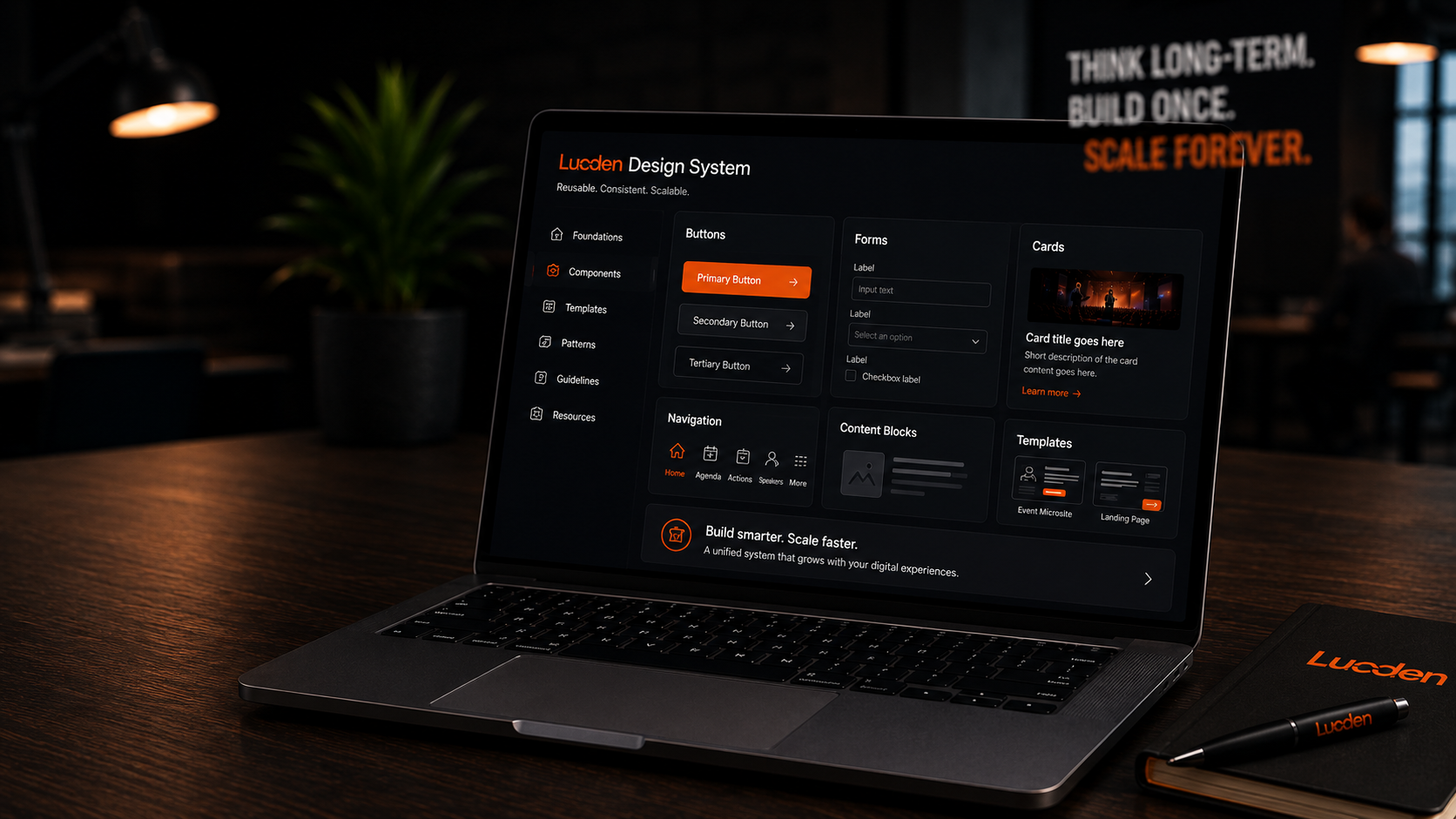
Rather than designing every experience from scratch, we focus heavily on identifying which parts of a system can become reusable long term.
Navigation structures, content modules, registration flows, dashboards, interaction patterns and component libraries can often be designed in ways that allow future experiences to scale far more efficiently.
Importantly, this isn’t just a technical decision.
It’s a strategic one.
Reusable systems create consistency across experiences while dramatically reducing future delivery time and operational overhead. Teams spend less time recreating existing functionality and more time improving the quality of the experience itself.
That usually creates far more long-term value than repeatedly building isolated solutions.
Why modular thinking improves efficiency
A large part of the process focused on understanding which parts of the experience were genuinely unique and which parts could become modular and reusable across future projects.
Certain interaction patterns were standardised, shared components were structured more intentionally and content systems became significantly more flexible underneath the experience.
One of the biggest advantages of this approach is that digital products become much easier to evolve over time.
Instead of rebuilding entire platforms, teams can update, improve and scale existing systems far more efficiently. New campaigns, products or event experiences can launch faster because much of the foundational structure already exists underneath them.
That flexibility becomes incredibly valuable as organisations grow.
Creating stronger foundations behind digital experiences
Reusable systems also improve consistency.
Users begin recognising familiar navigation behaviours, interaction patterns and structures across different touchpoints. Experiences feel more connected and coherent rather than fragmented across separate builds created independently over time.
Importantly, creating reusable systems doesn’t mean making experiences feel generic.
It means building stronger foundations underneath them.
The visible experience can still evolve creatively while the underlying system architecture remains scalable, maintainable and efficient.
Following the restructuring work, the platform became significantly easier to maintain, expand and adapt for future use cases. Delivery timelines improved, duplicated effort reduced and the overall system created far stronger long-term value beyond the initial project itself.
It reinforced something we see repeatedly across digital experience design:
The most valuable digital projects are rarely the ones designed only for today.
More often, they’re the systems designed to scale intelligently over time.
That’s usually where long-term efficiency begins.
Summary
Reusable structures and modular systems can dramatically improve the long-term scalability of digital projects. Rather than rebuilding the same functionality repeatedly, organisations can create stronger foundations that support faster delivery, greater consistency and reduced operational complexity over time.
Some of the most effective digital systems are often the ones designed to evolve and expand efficiently rather than simply solving a single immediate requirement.
Working on something similar?
Feel free to drop the Lucden team a message on hello@lucden.com or call 0207 101 3268. Always happy to chat ideas through.