Behind the build
4 min read
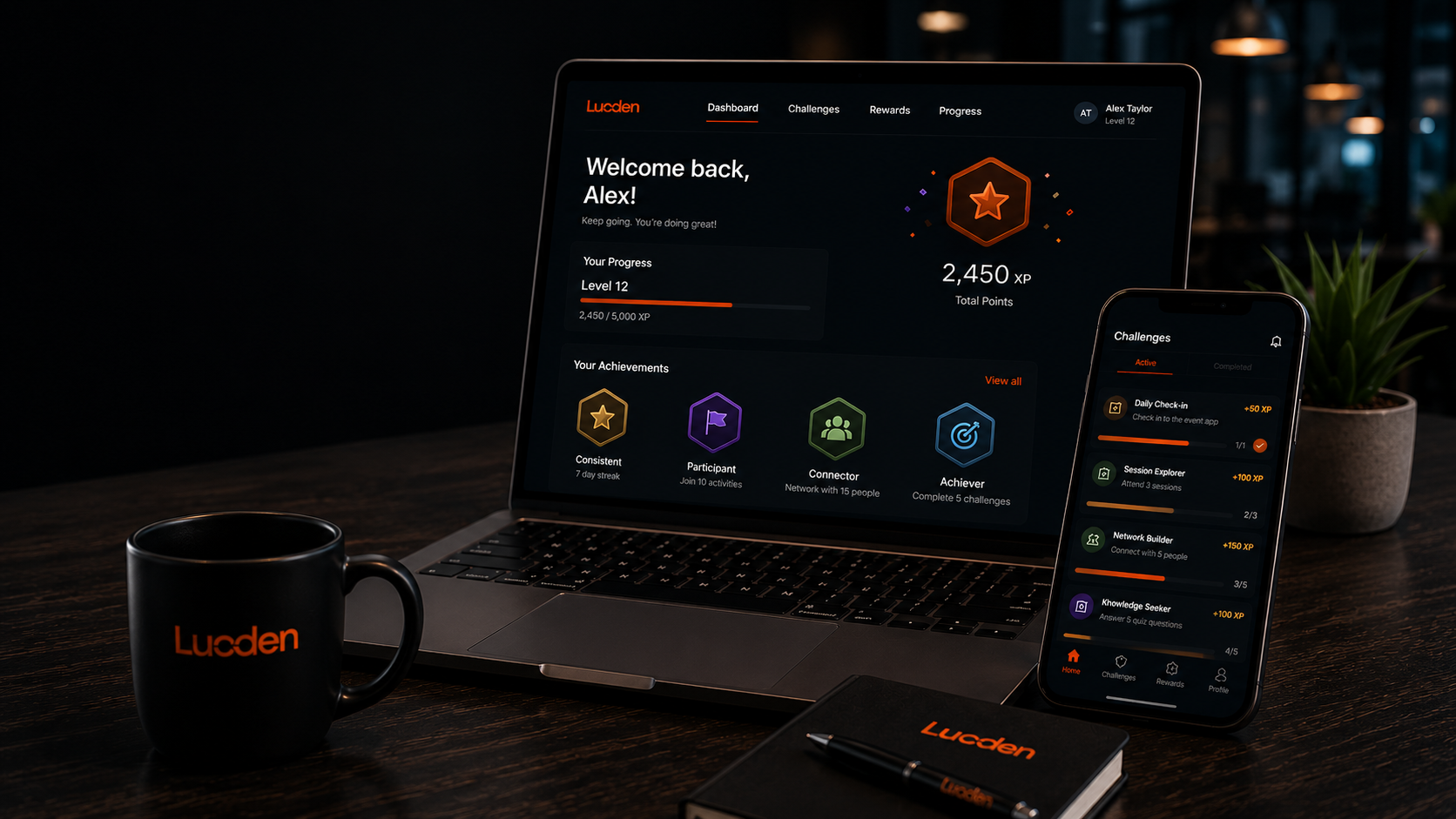
Behind the build: Using gamification carefully
Why gamification doesn’t automatically improve engagement
Gamification has become a popular solution for improving engagement across digital experiences.
Points. Badges. Leaderboards. Challenges. Rewards. Progress systems.
On paper, these mechanics often sound highly effective and, in the right context, they absolutely can be.
But one of the biggest misconceptions around gamification is the assumption that adding game mechanics automatically creates stronger engagement.
In reality, engagement only improves when the mechanics support a meaningful objective within the experience itself.
Otherwise, the interaction often becomes noise.
When gamification starts creating friction
We regularly work on projects where gamification is introduced very early in the concept stage as a way to increase participation or make an experience feel more interactive.
Sometimes the mechanics are visually impressive and technically well executed.
But once the user journey is mapped properly, an important question usually emerges:
Does the gamification genuinely improve the experience — or is it simply adding another layer of interaction?
That distinction matters enormously.
We recently worked through a project where several gamified mechanics had initially been proposed throughout the experience. The original concept included points systems, achievement structures and competitive interaction layers designed to encourage participation across the platform.
Individually, many of the ideas looked exciting.
But collectively, they introduced friction.
Designing gamification around meaningful behaviour
Certain interactions began distracting users from the core purpose of the experience. Some mechanics created unnecessary cognitive load while others encouraged behaviour that didn’t meaningfully support the project objectives themselves.
That’s one of the biggest risks with gamification.
It’s easy for the mechanics to become more visible than the actual experience.
When that happens, users often begin interacting with the system purely to complete the mechanics rather than because the engagement itself feels valuable or relevant.
Our approach focused heavily on simplifying the interaction strategy and identifying where gamification genuinely improved motivation, understanding or participation.
We looked closely at:
- What behaviours the experience was trying to encourage
- Whether the mechanics supported meaningful outcomes
- Where friction or distraction appeared
- How users emotionally responded to the interaction
- Whether the experience still felt intuitive
- Which interactions created value versus novelty
Why restraint creates stronger engagement
Several mechanics were simplified or removed entirely, while others were redesigned to feel lighter, more contextual and more closely connected to the natural flow of the experience itself.
Importantly, the goal wasn’t to remove engagement.
It was to make engagement more purposeful.
That difference is incredibly important within gamified experiences.
The strongest gamification usually feels integrated rather than layered on artificially. Users should feel motivated naturally by progression, relevance or curiosity rather than overwhelmed by visible reward systems competing for attention.
Good interaction design creates momentum.
Gamification should support that momentum — not interrupt it.
Creating experiences that feel rewarding naturally
This becomes especially important within event environments, learning platforms and brand experiences where users are already operating with limited attention and varying levels of motivation.
Following the refinement process, the overall experience became significantly cleaner and more intuitive. Participation improved because interactions felt more natural, while the remaining gamified elements became more meaningful and less distracting within the wider journey.
It reinforced something we see repeatedly across digital experience design:
Gamification only creates value when the mechanics support the experience rather than compete with it.
That’s usually where stronger engagement begins.
Summary
Gamification can be highly effective when it supports meaningful behaviour and improves the overall experience naturally. But adding points systems, rewards or competitive mechanics without clear purpose can often introduce friction and distract users from the core journey itself.
The strongest gamified experiences are usually the ones where interaction feels lightweight, intuitive and genuinely connected to the value of the experience underneath.
Working on something similar?
Feel free to drop the Lucden team a message on hello@lucden.com or call 0207 101 3268. Always happy to chat ideas through.