Behind the build
4 min read
Behind the build: Small UX decisions that improve live event flow
Why queue problems often start before the queue itself
When people think about queue management at events, the conversation usually focuses on operations.
More staff. More scanners. More registration desks. More hardware.
But in many cases, queue problems begin much earlier than the physical queue itself.
They begin with the user experience surrounding it.
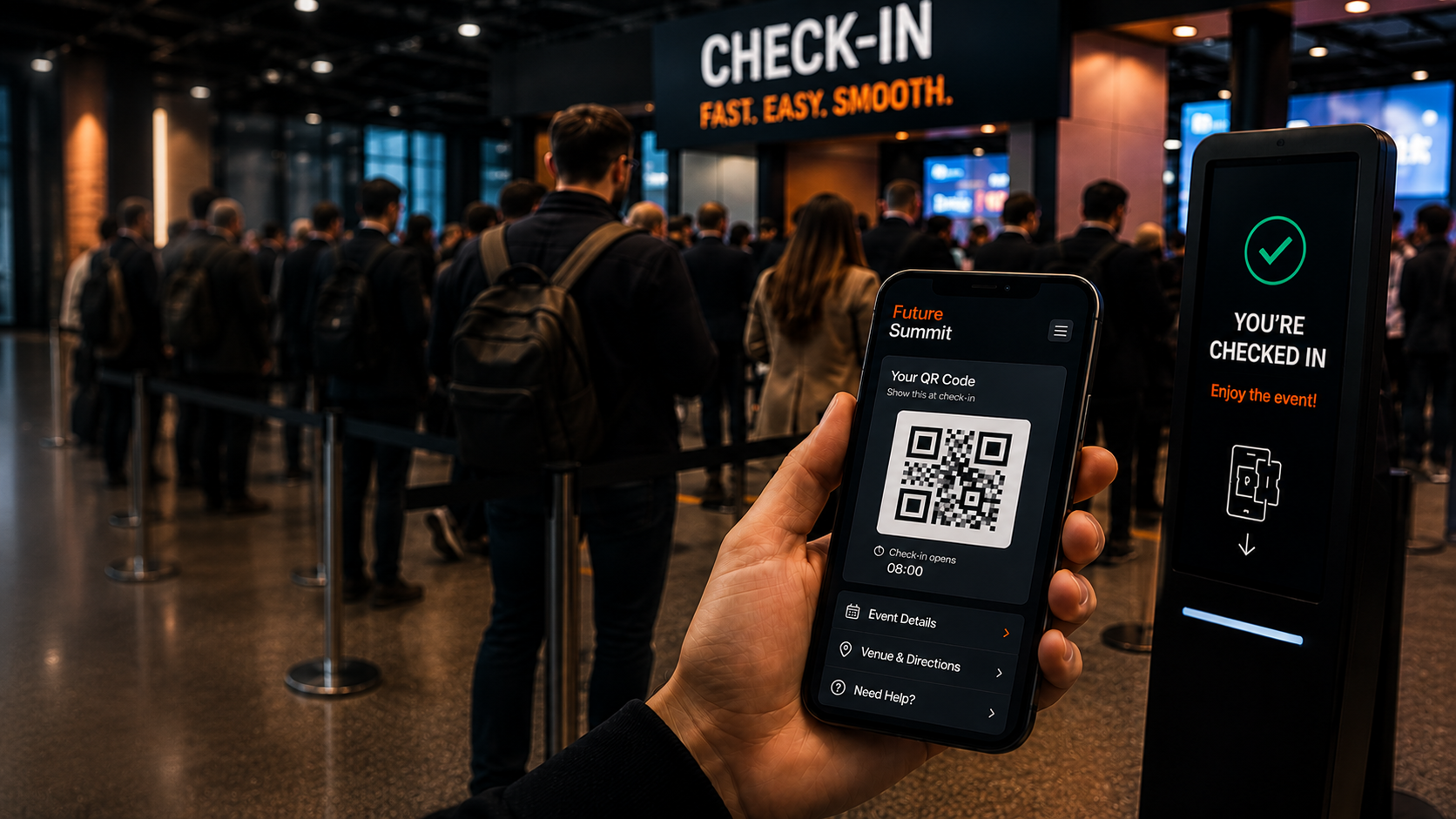
We regularly see event environments where delays are unintentionally created through small moments of friction within the attendee journey. People stop to search for confirmation emails, hesitate during check-in or struggle to understand where they need to go next.
Individually, those moments seem minor.
Collectively, they can dramatically slow attendee flow.
Identifying friction within the attendee journey
We recently worked through an event experience where queue management had become a growing issue despite significant operational planning already being in place.
The instinctive assumption was that additional staffing or technology would be required to improve throughput.
But once we reviewed the attendee journey more closely, it became clear that much of the friction was being created through UX decisions rather than operational limitations.
The registration and check-in flow contained too many decision points, important information wasn’t surfaced clearly enough before arrival and several interactions required attendees to stop and interpret instructions in busy environments.
That’s a significant issue within live events where people are often distracted, under time pressure and moving quickly.
Why small UX decisions matter in busy environments
In event environments, even small moments of hesitation can create bottlenecks surprisingly quickly.
Our approach focused on simplifying the attendee journey before attendees physically reached the queue itself.
We looked closely at:
- What users needed to know before arrival
- Where uncertainty was being introduced
- Which interactions slowed movement
- How visibility could be improved
- Where unnecessary decisions existed
- How the experience could feel more instinctive under pressure
Several stages were simplified or consolidated, instructions became clearer and key actions were prioritised more effectively throughout the journey.
Reducing friction without adding more technology
Importantly, the improvements weren’t driven by adding more technology.
In many cases, the opposite was true.
Reducing interaction complexity often had a far bigger impact than introducing additional systems or hardware into the environment.
That’s something we see repeatedly across live event experiences.
The strongest attendee journeys usually feel almost invisible. People move naturally from one stage to the next without needing to stop and consciously work out what they should do.
Good UX quietly removes friction before attendees even notice it exists.
Designing event journeys that feel effortless
Following the refinement process, attendee movement became significantly smoother and queue pressure reduced without increasing staffing levels or introducing major new operational infrastructure.
The experience felt calmer, clearer and easier to navigate despite operating within the same physical environment.
It reinforced something we see repeatedly across event experience design:
Queue management is rarely just an operational challenge.
More often, it’s a user experience challenge happening in real time.
That’s usually where meaningful improvements begin.
Summary
Improving attendee flow at live events often comes down to reducing friction within the user journey rather than simply adding more operational infrastructure.
Clearer instructions, fewer decision points and simplifying interactions can significantly improve queue management by helping attendees move through environments more naturally and confidently.
Working on something similar?
Feel free to drop the Lucden team a message on hello@lucden.com or call 0207 101 3268. Always happy to chat ideas through.