Behind the build
4 min read
Behind the build: Reducing risk before projects scale
Why prototyping matters earlier than most teams realise
One of the biggest risks in digital projects is moving too far into development before the experience itself has been properly tested.
It’s surprisingly common.
Teams align around presentations, documents, feature lists and technical discussions without ever truly experiencing how the product or interaction will behave in practice. On paper, everything can appear logical. But once real users begin moving through an experience, completely different challenges often emerge.
That’s why prototyping has become such an important part of how we approach digital projects.
Experiencing the product before committing to full development
For us, prototyping isn’t simply a visual exercise or presentation tool.
It’s a way of reducing uncertainty before projects scale into full production.
We recently worked through a project where the initial concept looked strong during planning discussions. The proposed functionality was clear, stakeholder requirements had been captured and the development direction appeared relatively straightforward.
But once the experience was prototyped and tested interactively, several important issues immediately became visible.
Some journeys were more complicated than expected, key interactions introduced unnecessary friction and several features that originally felt essential became unnecessary once the experience was tested properly.
Why prototyping changes project decisions
That’s one of the biggest advantages of prototyping.
It allows teams to experience the product before committing heavily to development.
Instead of debating ideas theoretically, stakeholders can move through real interaction flows, test assumptions and identify where simplifications or usability issues exist while changes are still relatively fast and inexpensive to make.
That stage often changes the direction of projects significantly.
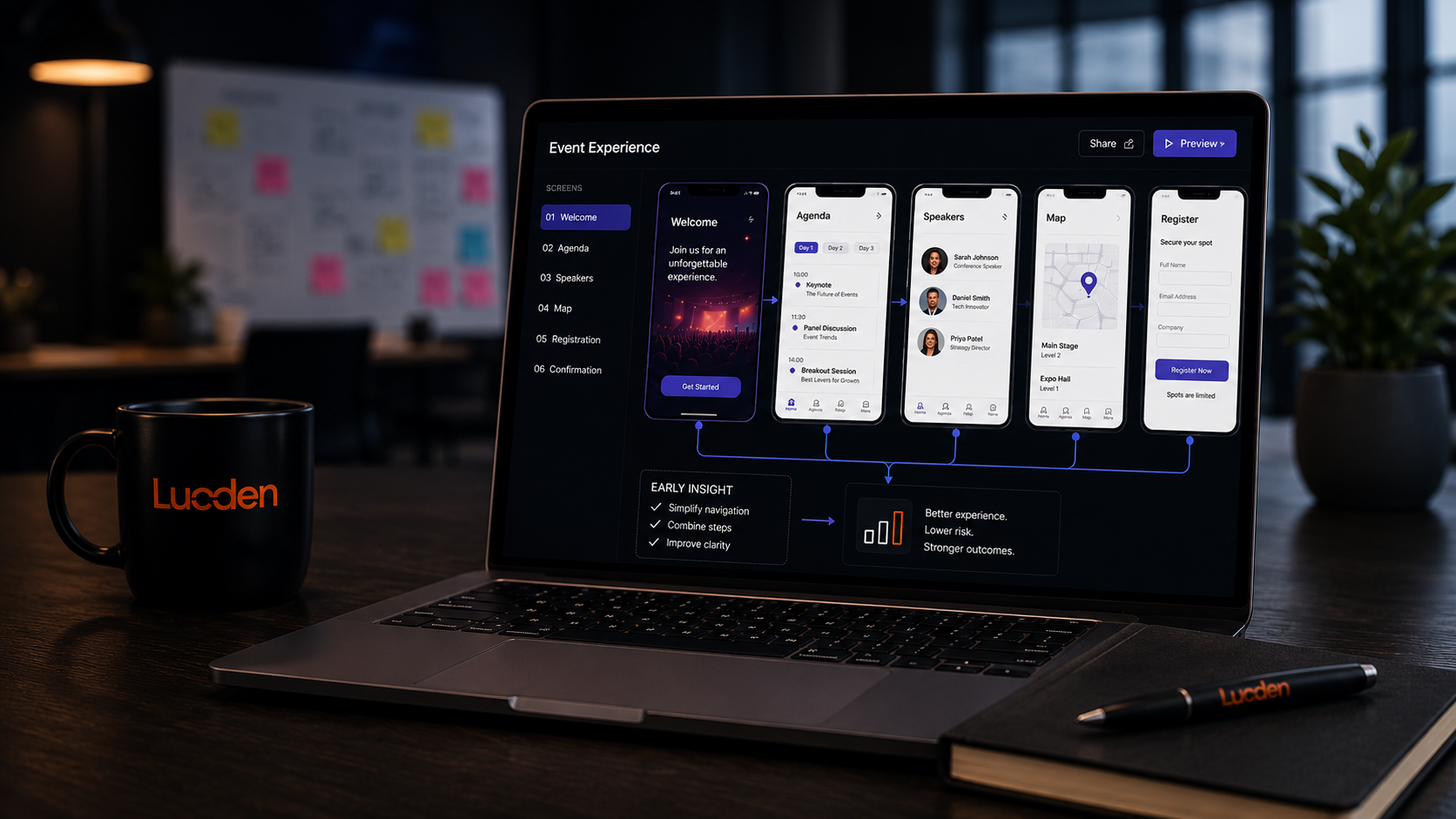
In many cases, the prototype phase reveals opportunities to:
- Simplify journeys
- Reduce unnecessary features
- Improve usability
- Restructure information
- Clarify interactions
- Remove development complexity
Importantly, those discoveries usually happen before significant build costs have been committed.
Reducing risk while improving alignment
Digital projects naturally become more expensive and harder to change as development progresses.
The earlier issues are identified, the easier it becomes to refine the experience without disrupting timelines, budgets or wider project momentum.
But prototyping isn’t only about reducing risk.
It also creates alignment.
One of the biggest challenges within digital projects is that different stakeholders often visualise the final outcome differently, even when discussing the same concept. Interactive prototypes help close that gap by giving teams something tangible to react to rather than relying purely on meetings or documentation.
That usually creates faster decisions and clearer conversations.
Why testing behaviour matters more than assumptions
We often find that once a prototype exists, project discussions shift dramatically.
Conversations become less abstract and more focused around usability, behaviour and interaction flow.
The strongest digital products rarely emerge from documentation alone. More often, they evolve through testing, refining and improving interactions before development fully scales.
Following the prototype phase in this particular project, the overall experience became significantly cleaner and more focused. Several unnecessary features were removed, interaction pathways became more intuitive and the final development scope became far more efficient as a result of the early testing process.
It reinforced something we see repeatedly across digital experience design:
The fastest way to reduce risk in digital projects is to experience the product properly before building it fully.
That’s usually where better decisions begin.
Summary
Prototyping plays a critical role in reducing risk before digital projects move into full development. Testing interaction flows early often reveals usability issues, unnecessary complexity and opportunities for simplification long before significant build costs are committed.
Some of the strongest digital products are usually the result of refining behaviour and usability through early testing rather than relying purely on documentation or planning discussions.
Working on something similar?
Feel free to drop the Lucden team a message on hello@lucden.com or call 0207 101 3268. Always happy to chat ideas through.